

Best Selling Ecoprinted Mulmul Cotton Sarees
Today fashion is becoming increasingly fast and mass produced, handcrafted textiles are beginning to hold a deeper meaning. More people across the USA and globally are moving toward slow fashion pieces that feel personal, breathable, artistic, and environmentally conscious. Among these emerging favorites are eco-printed mulmul cotton sarees, lightweight drapes created using real botanical elements and natural dyes.
At Kokikar, two of the most loved eco-printed sarees are made on soft mulmul cotton using natural madder root dye and marigold flower dye. These sarees are wearable impressions of nature created through time, patience, and traditional craftsmanship. For slow fashion lovers, collectors of artisan textiles, and those looking for sustainable handmade sarees, these pieces represent a balance between elegance and environmental responsibility.

Why Mulmul Cotton Sarees Are Becoming Popular Worldwide
Mulmul cotton, often known as one of the softest cotton fabrics, has been admired for generations because of its breathable and feather light texture. Unlike heavy synthetic fabrics, mulmul cotton feels airy against the skin, making it ideal for warmer climates and summer styling.
This is one reason why lightweight cotton sarees are gaining popularity in the USA, especially among people who prefer comfortable, breathable, and minimalist fashion. A mulmul cotton saree drapes naturally, feels soft throughout the day, and carries an understated luxury that does not rely on excessive embellishment. Its simplicity allows the craftsmanship of eco printing and natural dyeing to truly stand out. For sustainable fashion enthusiasts, mulmul cotton also aligns with conscious clothing choices because cotton is biodegradable and long lasting.
The Art of Eco Printing on Cotton Sarees
Eco-printing is one of the most fascinating forms of botanical textile art. Instead of using synthetic surface printing or factory made patterns, real leaves, flowers, bark, and natural elements are carefully arranged on fabric. Through steaming and natural dye interaction, the botanical shapes transfer onto the cloth, creating organic impressions impossible to replicate exactly.
Eco-printing also significantly reduces dependence on synthetic chemical printing processes often associated with water pollution and textile waste. According to the United Nations Environment Programme, the fashion industry is among the major contributors to environmental pollution, increasing the importance of sustainable textile alternatives.
At Kokikar, eco-printing is approached slowly and intentionally. Each saree is handcrafted individually, allowing nature to shape the final outcome rather than forcing mechanical perfection.
1. Madder Dyed Eco-Printed Mulmul Cotton Saree
Among Kokikar’s globally loved pieces, the madder dyed eco-printed saree stands out for its earthy elegance and naturally warm tones. Madder root has been used for centuries as a natural dye source across various traditional textile cultures. Derived from plant roots, madder creates rich shades ranging from soft terracotta to muted earthy reds depending on the fabric and dyeing process.
The beauty of this natural dyed saree lies in its depth. Unlike artificial red dyes that often appear overly bright or flat, madder creates organic tonal variations that feel grounded and sophisticated. On soft mulmul cotton, these tones become even more graceful. The fabric absorbs the dye gently, resulting in a saree that feels both artistic and timeless.
What makes the madder dyed saree sustainable is not only the use of plant-based dyes, but also the philosophy behind its creation like
- handcrafted production instead of mass manufacturing
- lower chemical dependency
- reusable natural dye sources
- slower and lower impact textile methods
- long lasting timeless design rather than trend based fashion
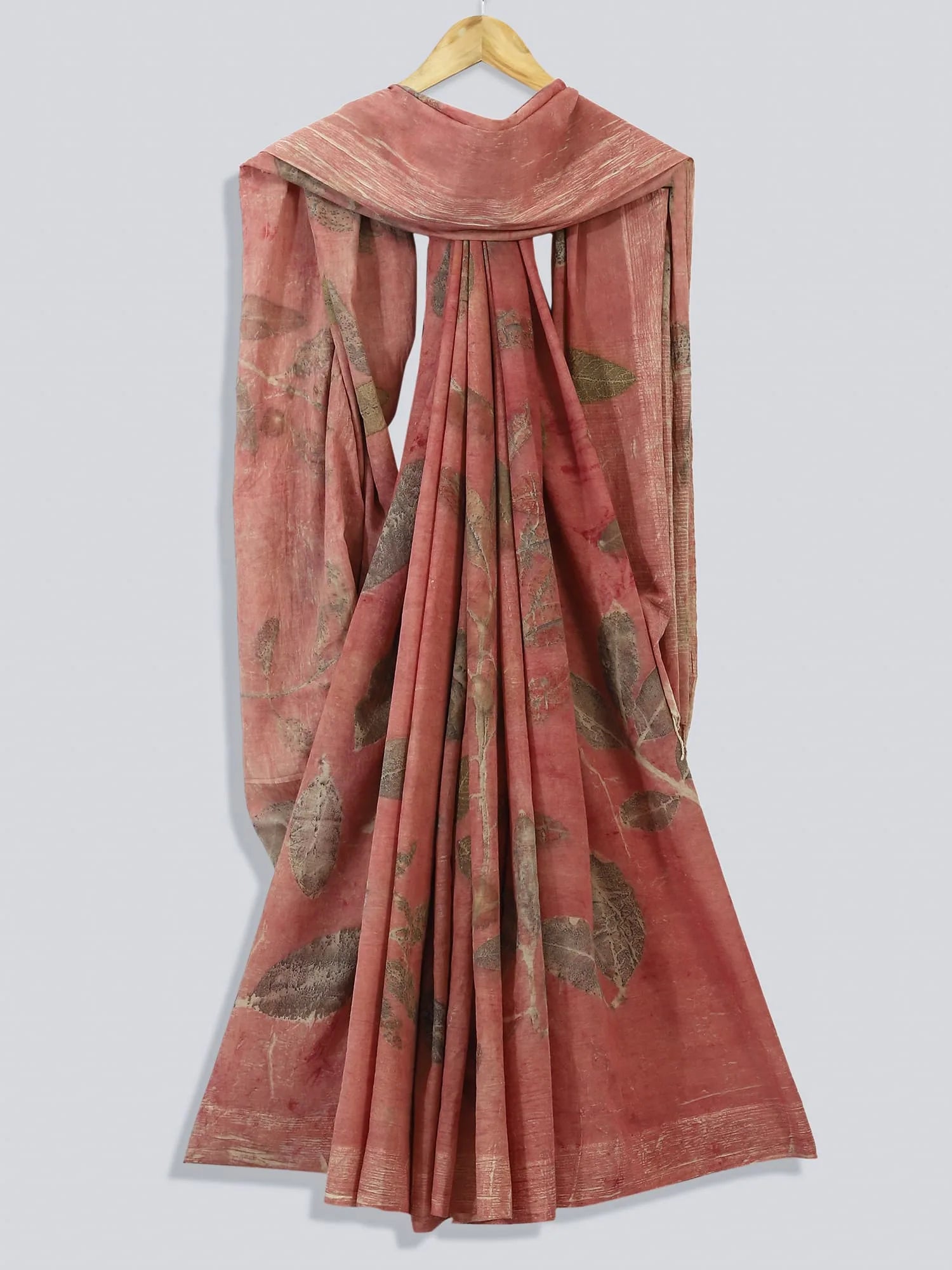
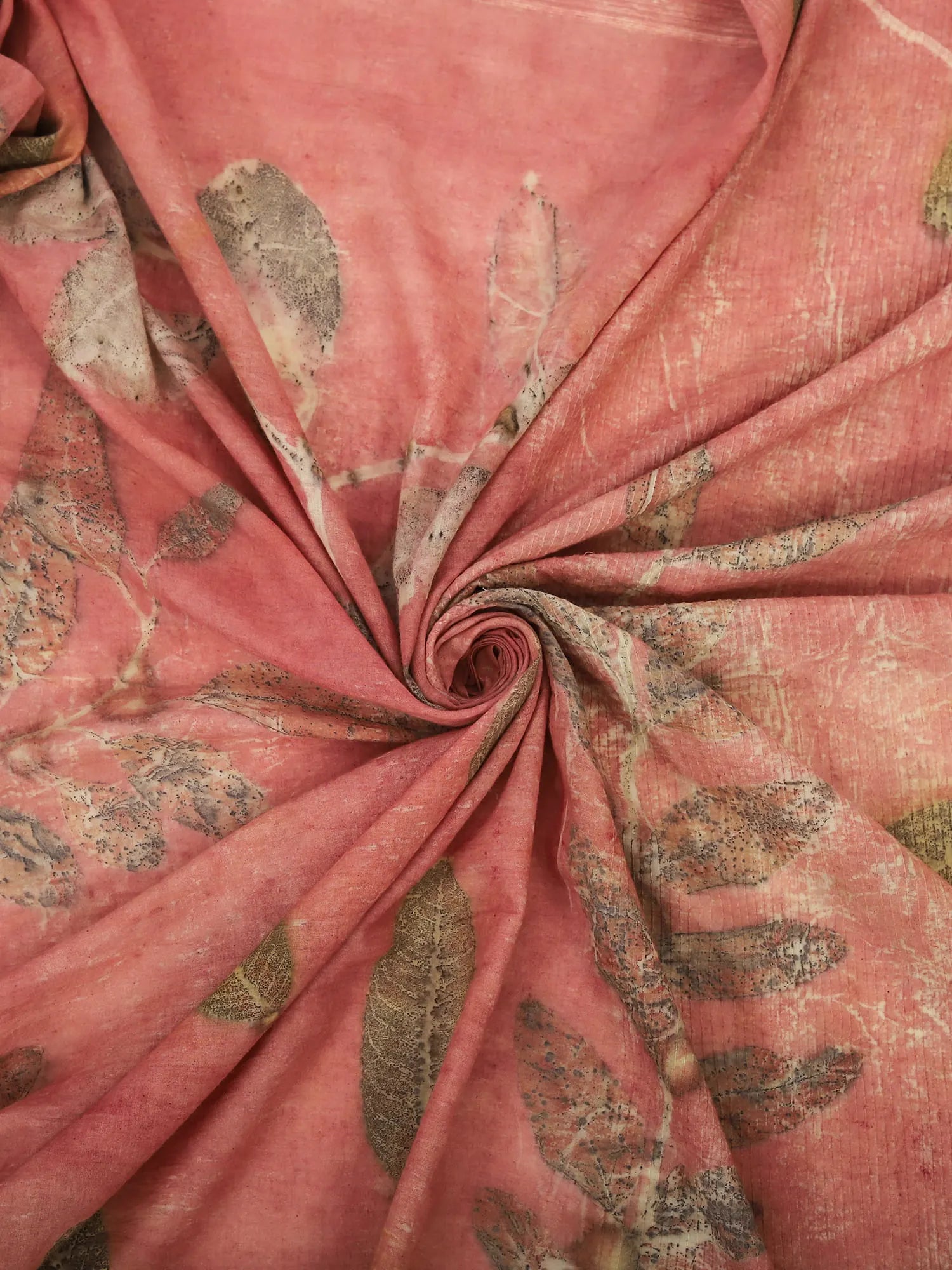
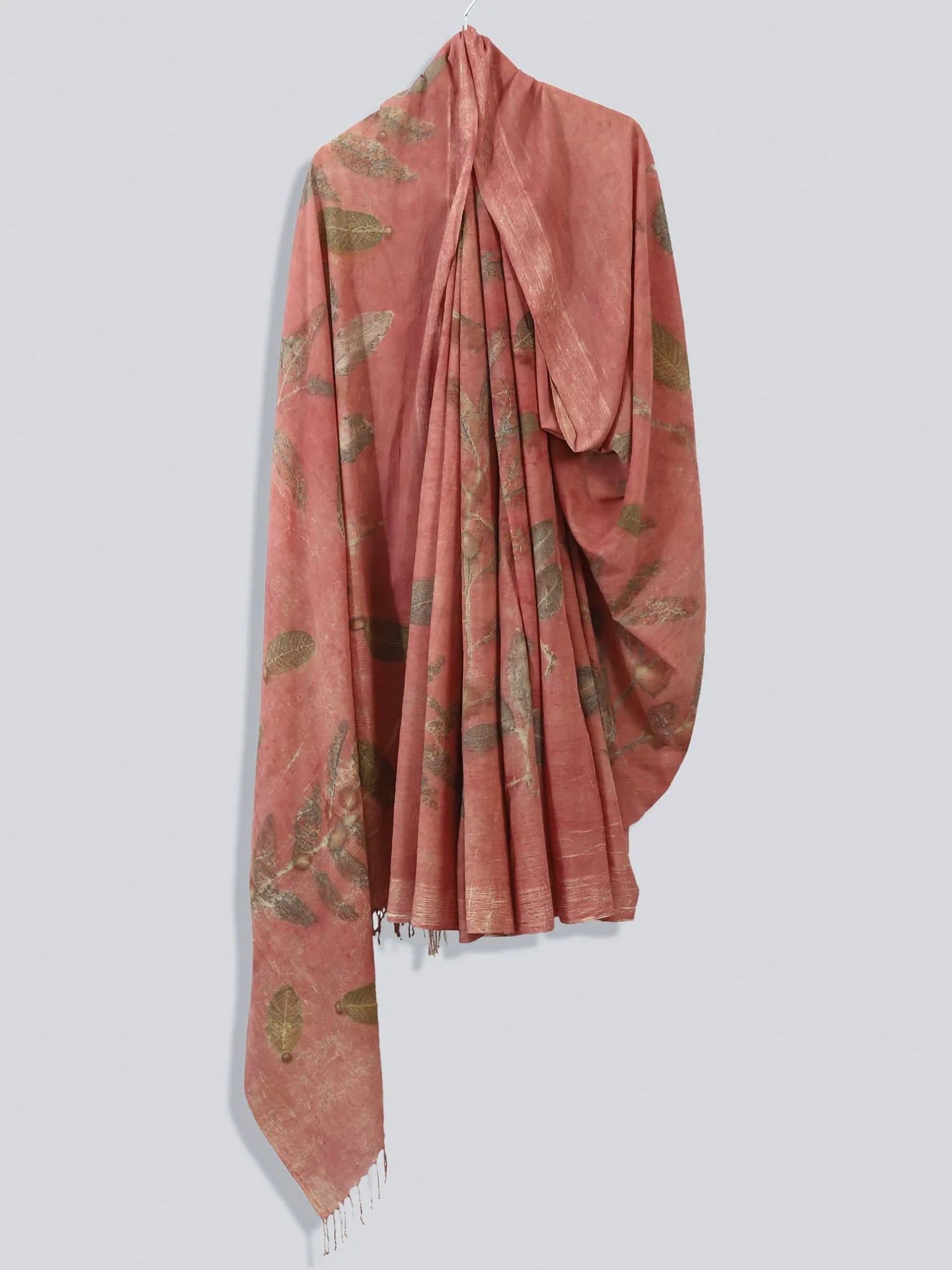
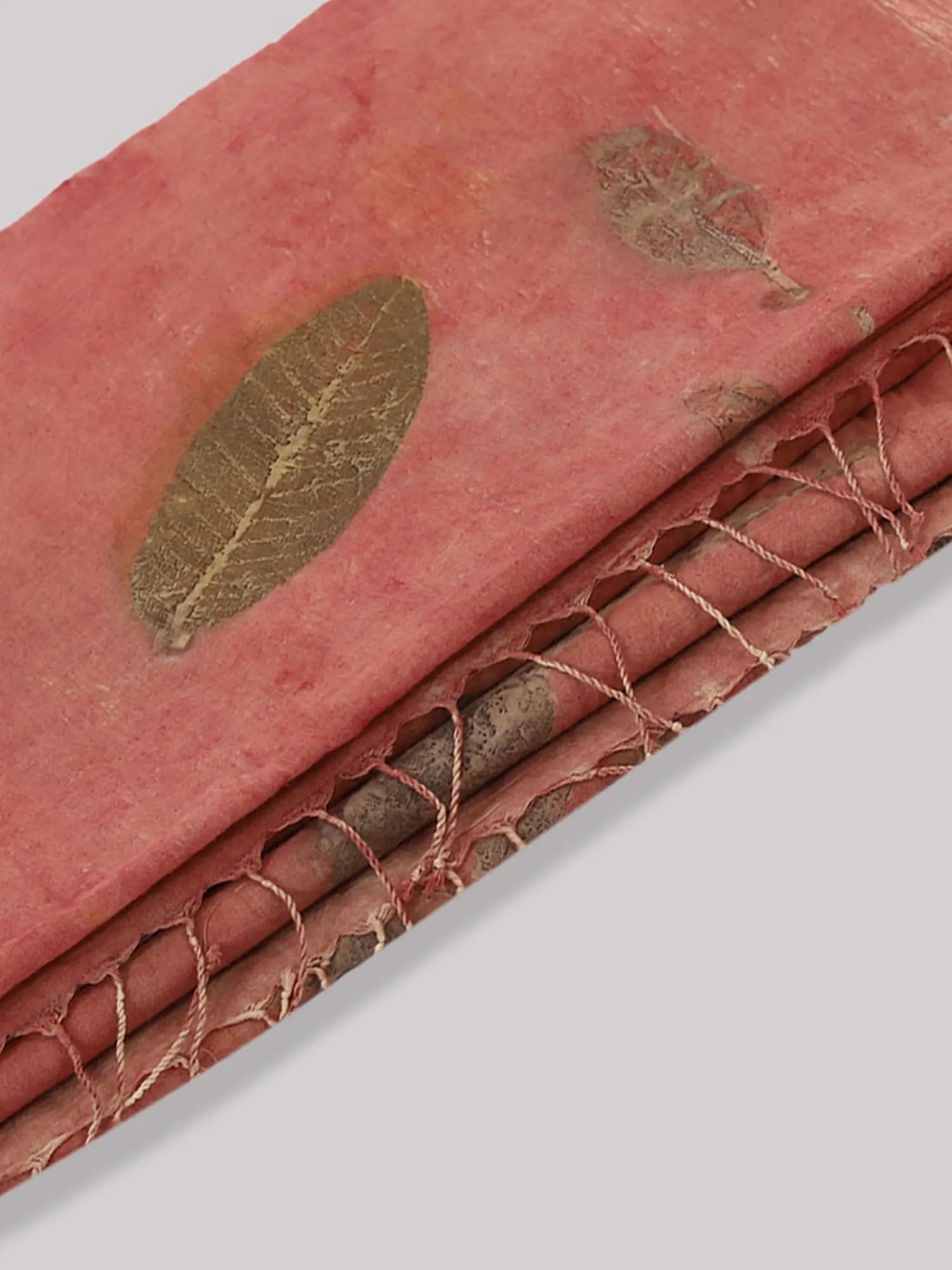
Because these sarees are created individually, no two pieces ever look exactly alike. Every botanical mark and every shade variation becomes part of the saree’s identity. This eco-printed cotton saree has become especially popular among customers in the USA who appreciate earthy luxury, artisan craftsmanship, and minimalist styling.
Explore our handcrafted eco-printed saree collection inspired by nature and slow fashion artistry.
2. Marigold Dyed Eco-Printed Mulmul Cotton Saree
If the madder saree reflects earthy warmth, the marigold dyed eco-printed saree carries the softness and brightness of sunlight preserved on fabric. Marigold flowers have long been associated with natural dye traditions because of their beautiful yellow and golden pigments. When transferred onto mulmul cotton through botanical dyeing techniques, the result is a saree that feels vibrant yet soothing.
The marigold dyed saree reflects nature in one of its most joyful forms. Its botanical tones work beautifully on lightweight cotton because mulmul enhances fluidity and movement. The saree drapes effortlessly, making it ideal for summer styling, vacations, artistic gatherings, brunch wear, or slow luxury wardrobes.
The sustainability of marigold dyeing also lies in its reduced reliance on artificial coloring agents. Natural flower dyes have been used historically across traditional crafts because they connect textile making with seasonal botanical resources.
This philosophy aligns strongly with the global slow fashion movement, where buyers increasingly prioritize
- ethical craftsmanship
- conscious shopping
- environmentally mindful production
- long lasting clothing
- artisan made textiles

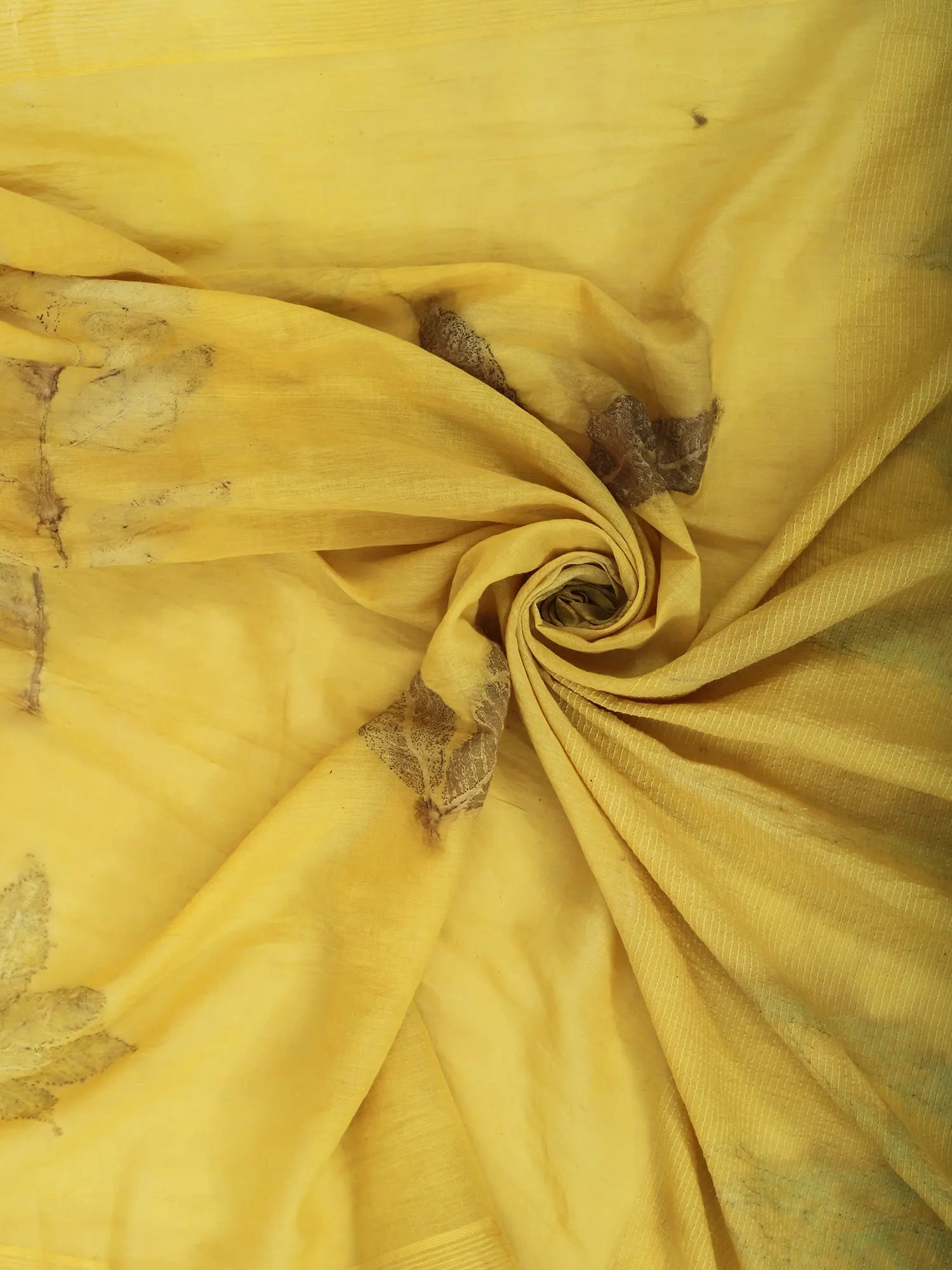
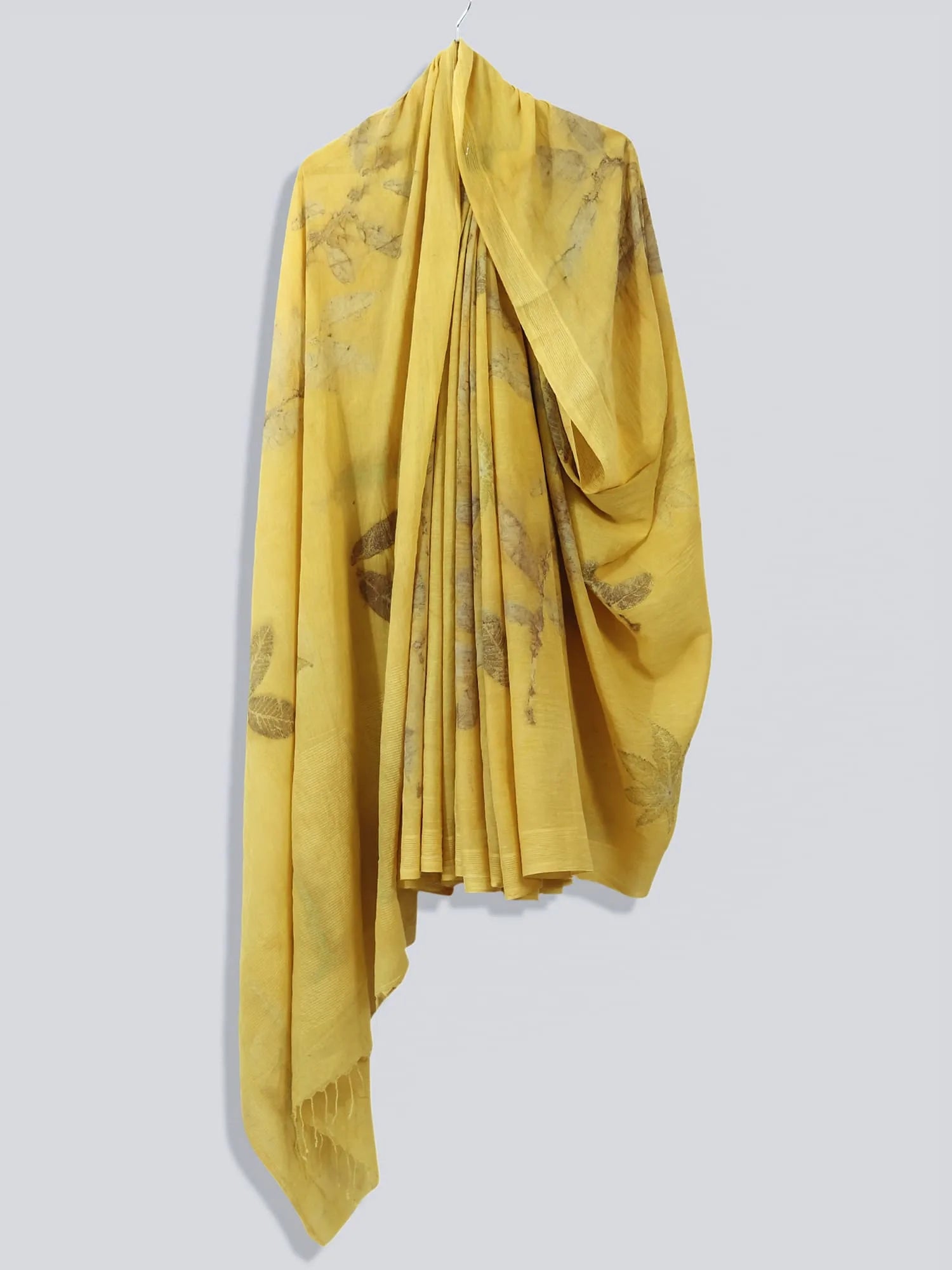
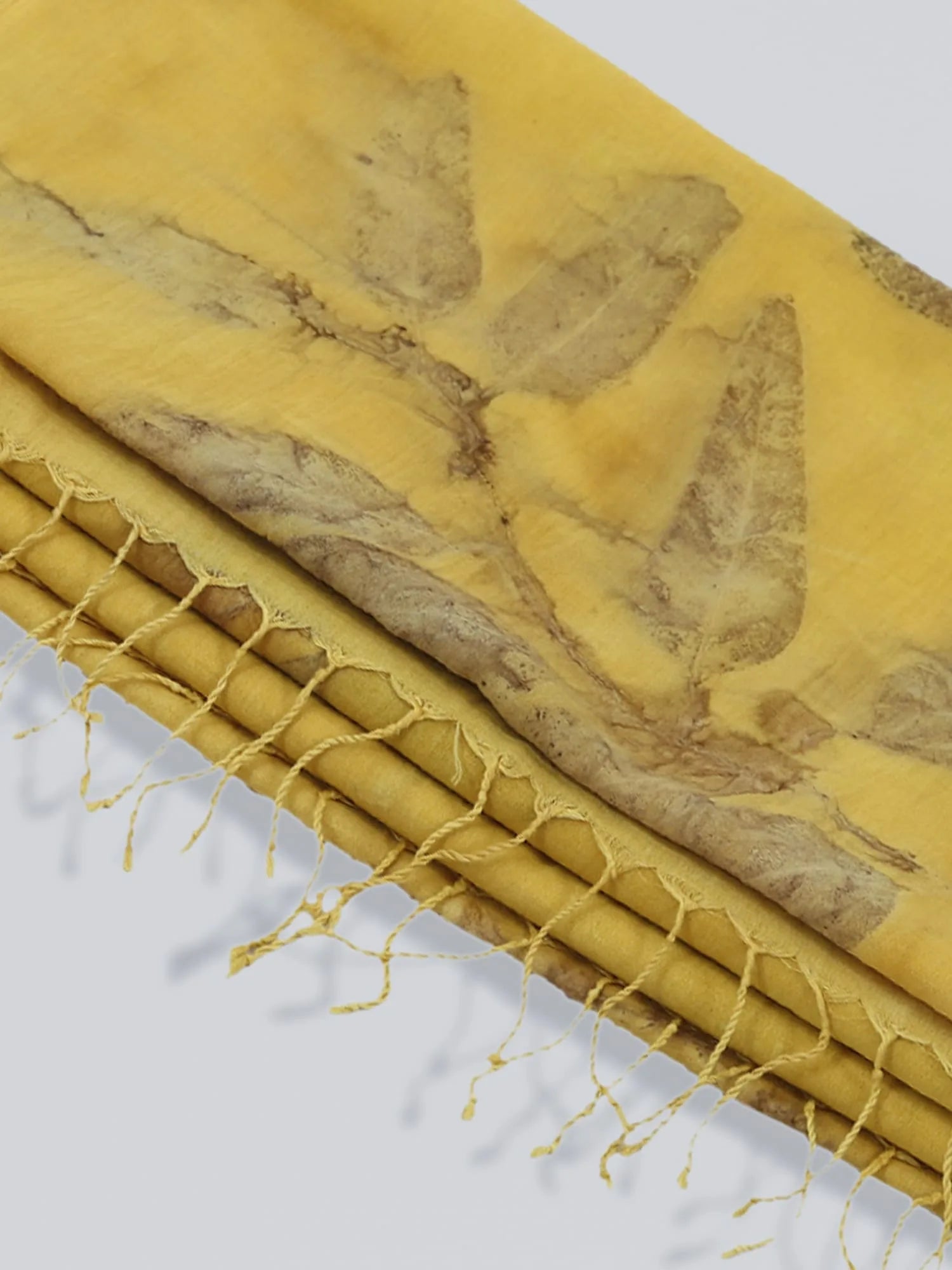
For many customers globally, this handmade cotton saree represents an alternative to heavily manufactured fashion. Instead of synthetic shine or factory perfection, it celebrates natural textures, floral irregularities, and handcrafted authenticity. Discover lightweight mulmul cotton sarees handcrafted using botanical eco-printing techniques.
Why Sustainable Fashion Lovers in the USA Are Choosing Eco-Printed Sarees
The rise of sustainable fashion in the USA has encouraged more buyers to move away from disposable clothing and toward meaningful handcrafted pieces.
People are increasingly asking:
- Who made my clothes?
- What dyes were used?
- Is the fabric breathable and biodegradable?
- Can fashion exist without harming the environment?
Eco-printed sarees naturally align with these values because they focus on craftsmanship over industrial speed. Unlike synthetic fashion pieces designed for short-term trends, handcrafted botanical sarees carry emotional value. They are wearable art pieces that preserve nature’s forms through textile traditions.
For global customers, especially in warmer regions, lightweight breathable sarees are also practical. Mulmul cotton’s airy feel combined with natural dyeing creates comfort without compromising elegance.
Why No Two Eco-Printed Sarees Look the Same
One of the most beautiful aspects of eco-printing is unpredictability.
Every leaf reacts differently.
Every flower releases pigments differently.
Every steaming process creates slightly different botanical impressions.
This means every handcrafted eco-printed saree becomes one of a kind. The uniqueness is proof of authenticity. In a fashion industry dominated by identical machine made production, these subtle differences create emotional connection and individuality. So customers are receiving a textile artwork shaped by nature itself. This is one reason why artisan handmade sarees are becoming increasingly valued globally.
Conclusion
The growing love for eco-printed mulmul cotton sarees in the USA and globally shows a larger shift toward conscious fashion choices. People are now searching for craftsmanship & authenticity instead of just clothing.
Kokikar’s madder dyed and marigold dyed sarees embody this philosophy through botanical eco-printing, natural dyes, and handcrafted slow fashion techniques. Each saree preserves the softness of mulmul cotton, the beauty of natural pigments, and the individuality that only handmade textiles can offer.
Explore Kokikar’s eco-printed mulmul cotton sarees and experience sustainable fashion shaped gently by nature, artistry, and time.